5 Ways to Use a Glut of Basil: Freezing, Oils and Sauces
By late July, the basil you fussed over in spring has usually become a problem. Two plants turn into six, the leaves are the size of your palm, and the first flowers are opening on stems you meant to pinch out weeks ago. You can only eat so much caprese. The good news is that basil is one of the easiest herbs to preserve, and the methods below will carry that green, peppery hit of summer into the darker months — without filling the freezer with fifty identical bags.
Ice-cube trays are the fastest route from glut to larder, and they give you perfectly portioned blocks that drop straight into a hot pan. One rule is worth following: basil bruises and oxidises quickly, so the less you handle it, the better it keeps.
Oil cubes are the most useful. Drop one into a pan of garlic and chilli for a quick pasta sauce, or melt one over roasted vegetables. Water cubes keep the flavour cleaner, which is what you want if you plan to blend them into a green soup or a jug of lemonade. If you would rather not use trays, freeze the leaves first on a tray lined with baking parchment and bag them once solid — that way they don't clump together.
Simple freezing works, with one caveat: raw basil leaves darken in the freezer, sometimes almost black. The flavour survives perfectly well, so use them in anything cooked and accept that they won't look like much scattered over a plate.
Blanching is the fix if you want leaves that stay green. Bring a pan of water to the boil, drop the leaves in for five to ten seconds, then lift them straight into iced water. Drain, squeeze gently and freeze in flat bags so they thaw fast. This is a good job for a wet afternoon when you have more basil than you can reasonably use, and the blanched leaves behave almost like fresh in a sauce.
Thai basil and lemon basil freeze well by either method. The citrus-scented types are worth keeping for curries and noodles, where their perfume matters more than their looks.
Salt preserves basil in a way nothing else quite does, and a jar keeps for months in the cupboard. It is also the answer to a very specific problem: what to do with a glut when the freezer is already full.
Roughly equal volumes of packed basil leaves and coarse sea salt is a good starting point. Blitz them together in a food processor, or bash them in a pestle and mortar if you prefer a rougher, more rustic texture. Spread the damp green salt over a tray lined with baking parchment. It is ready when you can rub a pinch between your fingers and it crumbles rather than clumps. Store it in a small jar and use it on tomatoes, roast potatoes, grilled fish and focaccia.
Lemon basil or Greek bush basil makes a particularly good version for chicken and fish; Thai basil suits salt used on rice and stir-fries.
If you would rather keep it lazy, layer whole leaves and salt in a jar, press them down and leave it in the fridge. It will be usable in a week and will darken as it sits — flavour intact.
Basil oil is the most luxurious way to use a glut, and the trick is to keep it cold. Blanch and drain the leaves, blitz them with roughly three times their volume of mild olive oil, then strain through a cloth if you want a clear, vivid green oil. It will hold in the fridge for four or five days, and longer if you freeze it in cubes.
Do not keep herb or garlic oils at room temperature. Oil infused with fresh garlic or herbs is a known risk for food poisoning if stored warm, so refrigerate and use promptly, or freeze. Vinegar is far more forgiving. Heat white wine vinegar gently with a handful of basil leaves, take it off the heat before it boils, let it steep for an hour, then strain and bottle. It keeps for months and makes a sharp, fragrant dressing with a little mustard and honey.
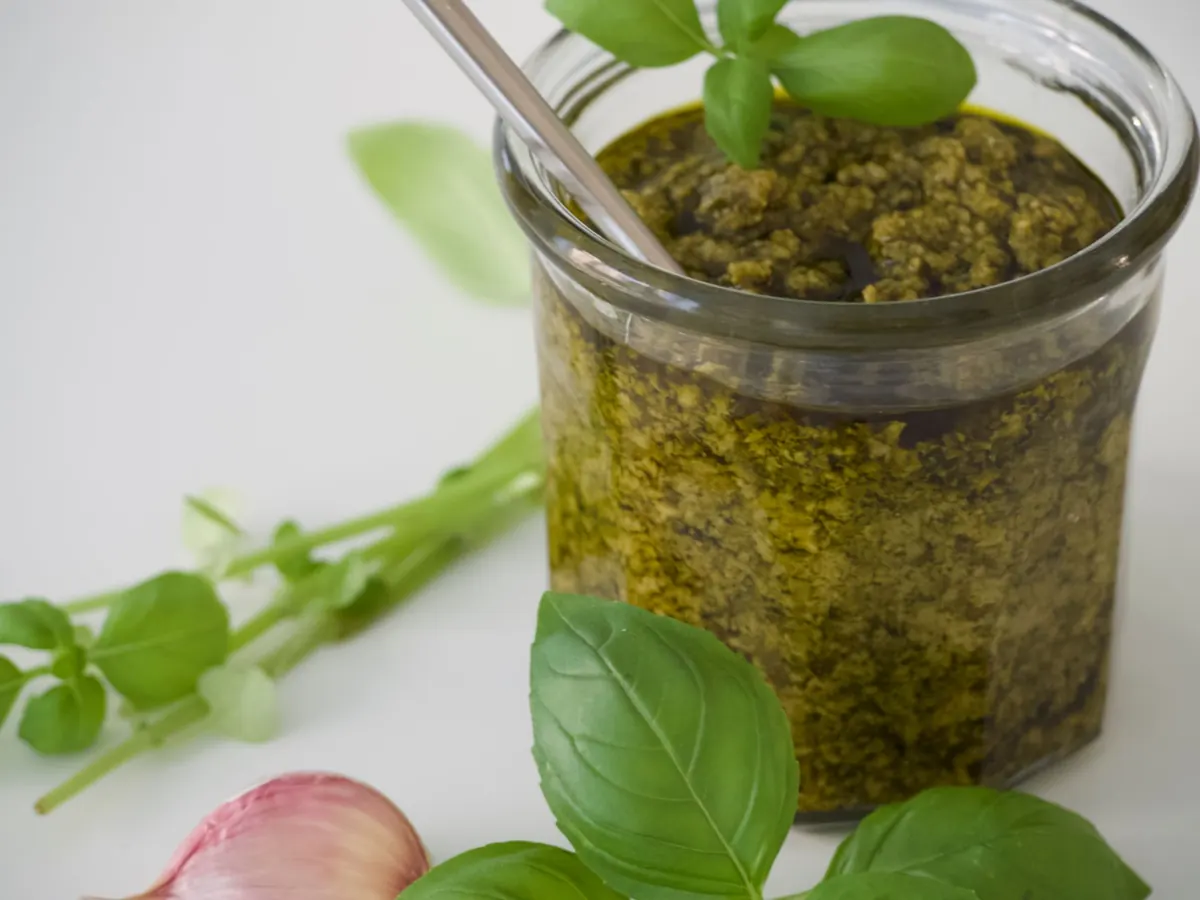
Pesto is the classic answer to a basil glut, and it freezes beautifully. A workable ratio: about 50g basil leaves, 30g toasted pine nuts or walnuts, a clove or two of garlic, 50g grated Parmesan, then enough olive oil to bring it together. Taste and salt at the end.
If you are freezing pesto for months rather than weeks, leave the cheese out. Stir it in when you thaw the jar and the texture will be far better. Spoon the pesto into small jars or ice-cube bags, press the surface flat and cover with a thin layer of oil to slow the darkening that always sets in at the top. It keeps for around three months.
Tomato sauce is the other reliable route. Roast halved tomatoes with garlic, oil and salt until they collapse, then crush them roughly. Add shredded basil off the heat, or in the last minute of cooking — long cooking flattens the aroma that made you grow the plant in the first place. Cool, portion into bags and freeze flat so they stack.
Preserving is easier when you are not trying to process everything in one weekend. Pick regularly — the more you harvest, the more the plant produces — and deal with a handful at a time so nothing sits wilting in the fridge. Sow a small amount every three or four weeks from spring onwards and you will have fresh leaves for longer. When the plants do flower, leave a few for the bees.
Label everything with a date and use the oldest first. If you still have more than you can handle, basil is the easiest thing in the garden to give away: a bag of leaves and a jar of basil salt is a better gift than most things you could buy.
Photo: jonathan emili / Pexels